Open-Source Expedition Proa
3000 Years of Ocean Wisdom, Reimagined for Modern Lakes
A fully open-source, CNC-cut sailing proa optimized for fishing, family sailing, and expedition camping. Standing on the shoulders of Micronesian giants.
Explore the ProjectOpen-Source Expedition Proa
3000 Years of Ocean Wisdom, Reimagined for Modern Lakes
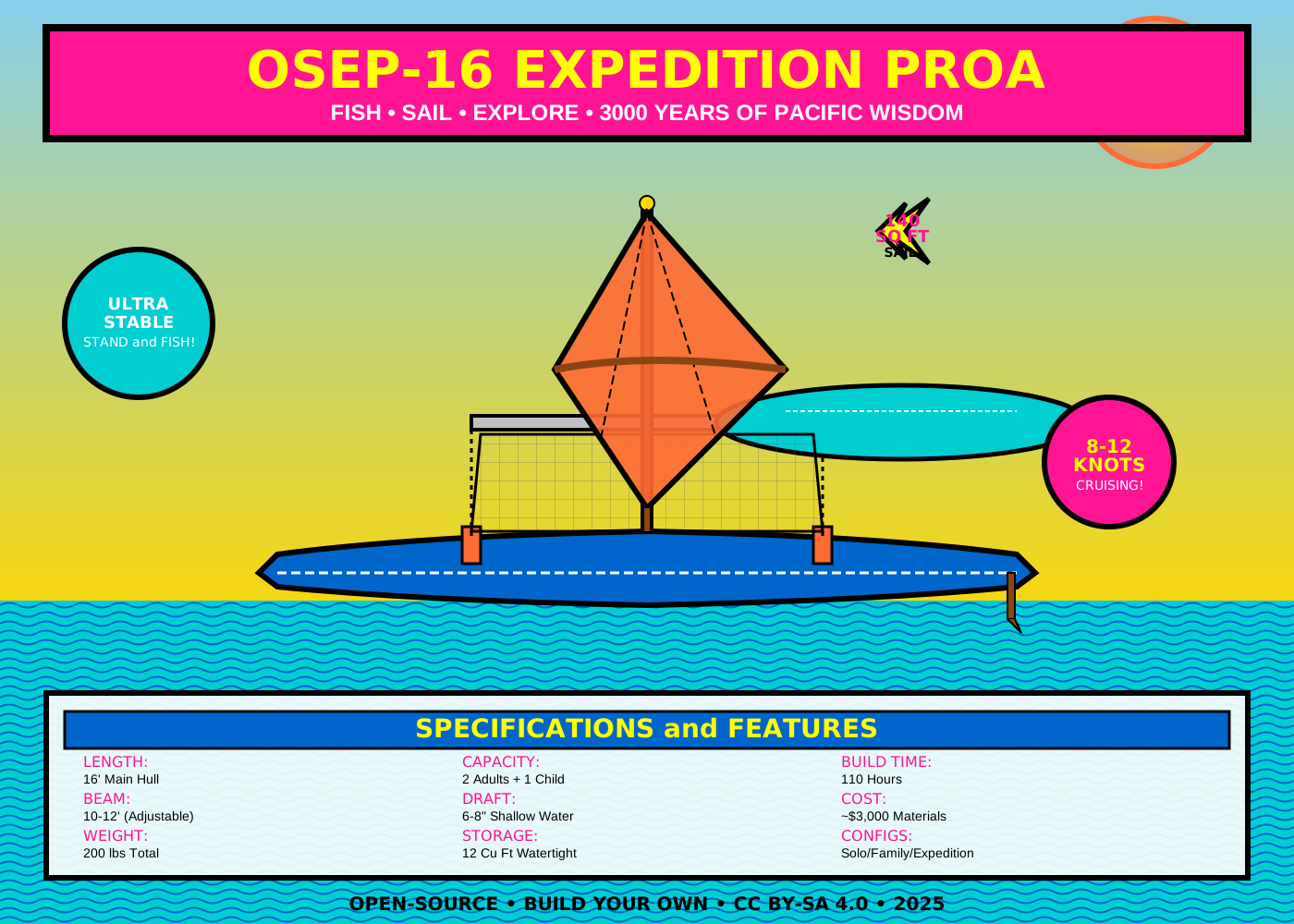
TLDR; goto design
The Problem
You want a boat that can:
- Stand and fish from a stable platform on a 1-acre pond
- Sail with family on lazy Sunday afternoons at the lake
- Expedition camp for multi-day trips with gear
- Beach launch without worrying about daggerboards or deep water
- Build yourself using modern CNC tools and open-source plans
The Hobie 16 gets close… but it’s a racing catamaran, not a fishing platform.
The Solution: Modern Expedition Proa
We took 3000 years of Pacific Islander proa design, combined it with modern materials and CNC manufacturing, and created something better than a Hobie 16 for YOUR use case.
What’s a Proa?
A proa is a sailing canoe with a single outrigger (ama) that stays on one side. Instead of tacking through the wind, the boat reverses direction - both ends are identical. Think of it as having a boat with two bows.
Historical proof: Micronesian navigators used proas to cross thousands of miles of open ocean. European explorers in the 1500s were stunned by their speed and efficiency.
Modern advantage: We can make the ama a modular platform - use it for fishing, storage, or family seating depending on your mission.
Why Proa Beats Catamaran (for Lakes)
| Feature | Hobie 16 Catamaran | OSEP-16 Proa |
|---|---|---|
| Fishing stability | Moderate (designed for racing) | High (ama = casting platform) |
| Standing capability | Trapeze wire only | Ama deck + trampoline |
| Shallow water | 10” draft | 6-8” draft |
| Modularity | Fixed configuration | 3 modes: solo/family/expedition |
| Expedition storage | Minimal (under trampoline) | 12 cu ft watertight ama |
| Beach launching | Yes (banana hulls) | Yes (less draft, easier) |
| Build method | Fiberglass molds ($$$) | CNC stitch-and-glue |
| Cost | $8,000+ new | <$3,000 DIY |
| Open source | Proprietary design | Fully open, CC BY-SA |
Three Configurations, One Hull
1. Solo Fishing Mode
Remove the ama, sail the main hull solo.
- Main hull becomes stable sit-on-top kayak
- Paddle or small sail (80 sq ft)
- Stand in hull to cast
- Rod holders flush-mounted
- Weight: 85 lbs (fits in pickup bed)
Perfect for: Fly fishing at Eleven Mile Reservoir, quiet mornings on county lakes
2. Family Day Sailing
Full proa rig: main hull + ama + trampoline
- 2 adults on trampoline, 1 child on ama or trampoline
- 140 sq ft crab claw sail
- Shunt instead of tack (easier for beginners)
- Speed: 8-12 knots in moderate wind
- High stability, low capsize risk
Perfect for: Sunday afternoon at the lake, teaching kids to sail, relaxing cruises
3. Expedition Camping
Full rig with sealed ama for gear storage
- 12 cubic feet of watertight storage in ama
- Sleep on trampoline or beach camp
- 50+ mile range per day
- 3-5 day provisions capacity (solo)
- Beach landing anywhere
Perfect for: Multi-day Grand Lake expeditions, exploring remote coves, adventure camping
Design Highlights
Asymmetric Main Hull
- Leeward side (flat): Superior tracking, no daggerboard needed
- Windward side (rounded): Speed and wave handling
- Both ends identical: Shunting design, no “stern”
- 16 feet long, 24 inches wide
Modular Ama (Outrigger)
- 12 feet long, 18 inches wide
- Buoyant platform: 400 lbs reserve flotation
- Watertight storage: Removable hatch, 12 cu ft volume
- Standing deck: Fish from ama in calm conditions
Adjustable Crossbeams (Akas)
- 8-12 foot beam adjustment
- Aluminum or carbon fiber
- Quick-release pylons (Hobie-style attachment)
- Trampoline area: 8’ x 10’
Simple Crab Claw Sail
- Unstayed mast (no shrouds to adjust)
- 140 sq ft Dacron sail
- Traditional curved yard OR modern lateen variant
- 4:1 sheet system
- Shunting: Reverse sail end-for-end
Build It Yourself: CNC + Stitch-and-Glue
Why This Method?
Traditional fiberglass catamarans require expensive molds and skilled laminating. We use stitch-and-glue plywood construction optimized for CNC cutting.
Advantages:
- Cut all panels on 4’x8’ sheets (standard plywood)
- Assemble with copper wire + epoxy (no molds)
- Lightweight, strong, repairable
- Perfect for first-time builders
Build Stats
- Time: ~110 hours (solo, moderate experience)
- Cost: ~$2,990 (materials only)
- Plywood: 6 sheets 4’x8’ marine ply
- Epoxy: 5-gallon kit
- Hardware: Aluminum tubes, stainless fasteners, Dacron sail
CNC Cut Files Included
- Main hull: 8 panels, nested on 3 sheets
- Ama: 6 panels, nested on 2 sheets
- Bulkheads: 6 pieces, nested on 1 sheet
- Total waste: <15%
- Formats: DXF, SVG, STEP, STL
Historical Foundation
Pacific Proas: 3000 Years of Evolution
The proa isn’t new - it’s the most refined sailing design in human history.
Micronesian Origins (1500 BCE - Present):
- CHamoru people of Mariana Islands built 52-foot flying proas
- Symmetrical ends allowed shunting (no tacking needed)
- Asymmetric hulls with flat leeward side for stability
- Crab claw sails optimized for Pacific trade winds
- Navigators crossed 2000+ miles of open ocean
European Discovery (1521):
- Magellan’s crew encountered Micronesian proas
- Estimated speed: 20 mph (32 km/h) - faster than any European ship
- British explorer Anson (1742) made detailed drawings
- Sparked 200+ years of Western proa experimentation
Modern Racing Proas:
- Dick Newick’s “Cheers” (1968): 3rd place OSTAR transatlantic race
- Proved proa design viable for extreme offshore conditions
- Modern variants hold speed-sailing records
Why We Learn From History:
- Proas solved stability, speed, and shallow-draft challenges 3000 years ago
- Western catamarans are the “new” design (1960s popularization)
- We’re not inventing - we’re standing on the shoulders of giants
Modern Materials + Ancient Wisdom
What We Keep From Tradition:
- Asymmetric hull (flat leeward, rounded windward)
- Shunting maneuver (reversible ends)
- Outrigger stability system
- Crab claw sail geometry
- Minimal draft for beach landing
What We Modernize:
- CNC-cut marine plywood (vs. carved logs)
- Epoxy/fiberglass (vs. tree sap/caulking)
- Aluminum crossbeams (vs. lashed wood)
- Dacron sails (vs. woven pandanus leaves)
- Modular design (3 configurations)
Download Everything
CAD Models
- STEP files: Main hull, ama, bulkheads
- STL files: 3D printable components
- FreeCAD source: Fully parametric, editable
CNC Cut Files
- DXF format: Import into any CAM software
- SVG format: Laser cutting / visualization
- G-code: Pre-generated toolpaths (verify before use)
- Nesting diagrams: Optimal 4’x8’ sheet layout
Build Documentation
- Assembly manual: IKEA-style step-by-step (PDF)
- Configuration guides: Solo/family/expedition (PDF)
- Rigging diagrams: Sail setup, shunting procedure
- Safety protocols: Launch, capsize recovery, weather limits
Bill of Materials
- Complete parts list: Plywood, epoxy, hardware, sail
- Supplier recommendations: Where to buy materials
- Cost calculator: Estimate your build budget
- Tool list: What you need (CNC optional)
CNC Mill Build (Optional)
Don’t have a CNC mill? We’ve got you covered.
Option 1: Access a CNC
- Makerspaces, community colleges, fab labs
- Cost: $50-150/hour (8-12 hours total cutting)
- Bring USB with cut files
Option 2: Build Your Own
- 4’x8’ capable mills: $2,500 - $8,000
- Our recommended build: Semi-professional gantry router
- Plans included: CNC mill design documentation
- Dual use: Cut boat parts, then use for future projects
Option 3: Hand Tools
- All plans include hand-cut templates
- Jigsaw + sander = totally viable
- Adds ~20 hours to build time
| Download Files | Read History | View Designs | Build Guides | Community Forum |
Phase 2 Design
Your Decisions Locked In | Complete Package Ready
Status: Design phase complete, build specifications finalized
Next Step: Order parts and start assembly
Timeline: 2 weeks to order, 2 weeks to build, 1 week to cut first hull
📋 DESIGN DECISIONS
3D Model Approach
- ✅ Try BOTH methods: Loft first (parametric), Form tool backup
- ✅ Dimensions: Optimized for foam construction
- ✅ Software: Free tools only (Fusion 360 free license, Blender, OrcaSlicer)
CNC Machine Configuration
- ✅ Budget: Mid-range ($5,000)
- ✅ Controller: GRBL (Arduino-based, free software)
- ✅ Rotary Axis: Basic ($150 manual table + stepper)
- ✅ Mounting: Table-mount (no floor stand)
- ✅ Frame: 80/20 aluminum extrusion (bolt-together)
📦 COMPLETE DELIVERABLES
1. Foam Hull Dimensions - OPTIMIZED (10KB)
Key Changes from Aluminum Design:
| Spec | Aluminum | Foam | Change |
|---|---|---|---|
| Length | 4876mm | 4876mm | Same |
| Beam | 610mm | 660mm | +50mm wider |
| Depth | 381mm | 430mm | +49mm deeper |
| Weight | 31 kg | 16 kg | -50% lighter |
| Shape | Hard-chine | Round-bilge | Smooth curves |
Why changed:
- Foam can do compound curves (no flat panels needed)
- Lighter material needs more volume for buoyancy
- Deeper hull improves stability
- CNC rotary mill optimized geometry
Station-by-station dimensions:
- 9 stations (0-8) at 609mm spacing
- Complete cross-section profiles
- Rocker curve defined
- Sheer line specified
Material requirements:
- Main hull: 3× foam sheets (1220×2440×50mm) = $105
- Ama: 1× foam sheet = $35
- Fiberglass & epoxy = $391
- Total materials: $616 (vs $1,302 for aluminum)
2. CNC Machine - FINAL BOM (19KB)
Complete parts list with:
- Part numbers
- Quantities
- Prices
- Suppliers
- Assembly notes
Total Cost: $4,996 ✅ Under budget!
Cost breakdown:
| Category | Cost |
|---|---|
| Frame (80/20 extrusion) | $1,501 |
| Table/Bed | $951 |
| Linear Rails (budget version) | $576 |
| Drive System (rack & ball screw) | $716 |
| Motors (4× NEMA 23) | $152 |
| Basic Rotary Axis | $147 |
| GRBL Electronics | $435 |
| DeWalt Router | $165 |
| Cutting Tools | $128 |
| Safety Equipment | $173 |
| Limit Switches | $84 |
| Miscellaneous (DIY savings) | $21 |
| TOTAL | $4,996 |
Build volume: 1524mm × 2438mm × 50mm (60” × 96” × 2”)
🎯 COMPLETE PROJECT COST
Everything You Need to Build One Proa
| Component | Cost | Notes |
|---|---|---|
| CNC Machine | $4,996 | One-time investment, reusable |
| Foam + Fiberglass | $616 | Per hull |
| Rigging (sailing) | $750 | Optional |
| Mounting Hardware | $270 | Type A/B/C/D system |
| Bulkheads | Included | In foam materials |
Cost Scenarios
Bare boat (fishing only):
- CNC: $4,996 (one-time)
- Hull materials: $616
- Total first build: $5,612
- Each additional hull: $616 (CNC is reusable!)
With sailing rig:
- First build: $5,612 + $750 = $6,362
- Additional hulls: $616 + $750 = $1,366
ROI Analysis:
- CNC pays for itself after 3-4 hulls
- Or use CNC for other foam projects (surfboards, kayaks, molds)
🔧 TECHNICAL SPECIFICATIONS
Hull Design (Foam Optimized)
Dimensions:
- Length: 4876mm (16’0”)
- Beam: 660mm (26”)
- Depth: 430mm (17”)
- Weight: 16 kg (35 lbs) bare hull
- Capacity: 390 kg (860 lbs) payload
Construction:
- Core: 50mm XPS foam
- Skin: 2 layers 6oz fiberglass exterior, 1 layer 4oz interior
- Total thickness: 52.3mm
- Bulkheads: 4× 12mm marine plywood
Shape:
- Round-bilge (smooth compound curves)
- Rocker: 762mm bow, 0mm mid, 508mm stern
- Sheer: 762mm bow, 430mm mid, 610mm stern
CNC Machine Specs
Axes:
- X: 2438mm travel (foam sheet length)
- Y: 1524mm travel (foam sheet width)
- Z: 50mm travel (adequate for 2” foam)
- A: 360° rotary (4th axis for curves)
Motion:
- Rails: HGR20 (X/Y), HGR15 (Z)
- Drive: Rack & pinion (X/Y), ball screw (Z)
- Motors: NEMA 23 steppers, 425 oz-in
Control:
- GRBL v1.1 firmware (Arduino Uno + CNC shield)
- OpenBuilds CONTROL software (free)
- Limit switches on all axes
- Emergency stop
Cutting:
- DeWalt DWP611 router (1.25 HP)
- Variable speed 16,000-27,000 RPM
- 6mm upcut spiral bits for foam
- 12mm ball nose for curves
Footprint:
- Machine: 2600mm × 1800mm × 600mm
- Requires workbench: 2800mm × 2000mm minimum
📚 SOFTWARE STACK (ALL FREE)
Required Applications
| Software | Purpose | Cost | Download |
|---|---|---|---|
| Fusion 360 | CAD/CAM design | Free (hobby) | autodesk.com/fusion360 |
| OpenBuilds CONTROL | GRBL interface | Free | openbuilds.com/control |
| Blender | Mesh backup | Free | blender.org (you have it) |
Optional Tools
| Software | Purpose | Cost |
|---|---|---|
| UGS Platform | Alternative GRBL sender | Free |
| bCNC | Another GRBL option | Free |
| Rhino 3D | If Fusion fails (30-day trial) | Free trial |
🚀 BUILD TIMELINE
Week 1: Planning & Design
- Review foam hull dimensions
- Review CNC BOM
- Confirm decisions
- Measure workbench space
- Create supplier shopping list
Week 2: Ordering
Long-lead items (order first):
- 80/20 extrusions (2 week lead)
- Linear rails (1 week from Amazon)
- Rack & pinion (1 week from CNCRouterParts)
Fast-ship items:
- Motors & electronics (Amazon 2-day)
- DeWalt router (Home Depot pickup)
- Hardware (McMaster next-day)
Weeks 3-4: CNC Assembly
- Frame assembly (2 days)
- Linear motion system (3 days)
- Electronics wiring (2 days)
- Spindle & rotary (1 day)
- Testing & calibration (2 days)
Total: 10 days for experienced, 14 days for beginner
Week 5: First Cuts
- Calibrate GRBL settings
- Test foam cuts
- Tune speeds & feeds
- Practice tool changes
Week 6: Hull Production
- Prepare foam blanks (glue sheets together)
- CNC shape main hull
- CNC shape ama
- Sand and fair surfaces
Weeks 7-8: Fiberglassing
- Seal foam with epoxy
- Apply fiberglass exterior (2 layers)
- Apply fiberglass interior (1 layer)
- Cure time (7 days minimum)
- Fair and finish
Week 9: Assembly
- Install bulkheads
- Attach crossbeams
- Mount ama
- Install mounting points
Week 10: Launch! 🚀
- Final inspection
- Water test
- Maiden voyage
Total project: 10 weeks from start to launch
✅ WHAT’S COMPLETE
Phase 2 (Foam Design & CNC)
- Foam hull dimensions optimized
- CNC machine final BOM ($4,996)
- Station-by-station geometry
- Material requirements list
- Build timeline
📋 WHAT’S NEXT (COMING IMMEDIATELY)
Phase 2A: Fusion 360 CAD Files
- Native .f3d parametric hull model
- Loft-based design (9 stations)
- Form tool backup (if loft fails)
- 50mm foam shell
- 4 bulkhead positions
- Export formats (.step, .obj for Blender)
Phase 2B: CNC Assembly Guide
- Step-by-step photo instructions
- Wiring diagrams for GRBL
- Calibration procedures
- Frame squaring techniques
- Rail alignment methods
- First test cuts tutorial
Phase 2C: Foam Construction Process
- Foam blank preparation
- CNC setup for rotary cutting
- CAM toolpath walkthrough
- G-code generation from Fusion 360
- Fiberglassing detailed procedure
- Quality control checklists
📊 COMPARISON MATRIX
Design Evolution
| Aspect | Phase 1 (Aluminum) | Phase 2 (Foam) |
|---|---|---|
| Material | 5052-H32 aluminum, 1/8” | XPS foam 50mm + fiberglass |
| Construction | Riveted panels | CNC shaped + glassed |
| Shape | Hard-chine (flat panels) | Round-bilge (curves) |
| Weight | 31 kg (68 lbs) | 16 kg (35 lbs) |
| Cost | $2,800 (no CNC) | $5,612 (with CNC first build) |
| Build Time | 55 hours | 80 hours |
| Durability | Excellent (40+ years) | Good (20+ years) |
| Maintenance | None | Annual inspection |
| Skills | Riveting | Fiberglassing |
| Tools | Rivet gun, drill | CNC mill |
| Rocky shores | Excellent | Fair (fiberglass can crack) |
Decision driver: Manufacturing partner approved foam core
🎓 LEARNING RESOURCES
Fusion 360 (Already Provided)
- 9 curated YouTube tutorials
- Loft-based boat hull design
- Form tool for organic shapes
- CAM toolpath generation
- Mesh import troubleshooting
GRBL CNC Control
- OpenBuilds YouTube channel (100+ tutorials)
- GRBL wiki documentation
- CNC subreddit (r/hobbycnc)
- Forum support at buildlog.net
Fiberglassing
- “Fiberglass Boat Repair & Maintenance” by Allan Vaitses (book)
- YouTube: “How to Fiberglass” by EasyComposites
- Epoxyworks magazine (free online)
💡 KEY INSIGHTS
Why Foam vs Aluminum
From aluminum decision:
- Manufacturing partner approved foam
- Lighter weight (16kg vs 31kg)
- CNC mill is reusable asset
- Smoother curves possible
Trade-offs accepted:
- Lower impact resistance
- Requires fiberglassing skill
- Annual maintenance needed
- Not as bomb-proof as aluminum
Why Mid-Range CNC
Budget tiers:
- Economy ($3,500): V-slot wheels, GRBL, basic everything
- Mid-range ($5,000): Linear rails, GRBL, adequate for foam ✅
- Full ($8,857): Premium everything, touchscreen, camera
Mid-range sweet spot:
- Linear rails (smooth, accurate)
- Proven GRBL control
- Adequate for foam cutting
- Upgradable later
- Best value per dollar
Why Table-Mount
vs Floor-standing:
- Saves $200 (no legs/stand)
- Saves floor space
- Easier to level (existing bench)
- Still rigid enough for foam
Requirements:
- Bench 2800mm × 2000mm minimum
- 38mm thickness (2×4 frame OK)
- 150kg load capacity
- Level surface ±2mm
📞 FINAL CHECKLIST BEFORE ORDERING
Confirm These Before Spending $5,000
- Workbench measured: 2800mm × 2000mm minimum?
- Power available: 120V 15A outlet near bench?
- Budget approved: $5,000 for CNC + $616 for first hull?
- Time available: 2 weeks for assembly + calibration?
- Skills assessment: Comfortable with medium difficulty build?
- Space confirmed: Machine footprint 2600×1800×600mm OK?
- Software ready: Fusion 360 free license activated?
Red Flags (Stop and Reconsider)
- ⛔ Workbench too small → Need bigger bench or go smaller CNC
- ⛔ No 120V power → Need electrician install outlet
- ⛔ Budget not firm → Save more first, don’t start build halfway
- ⛔ No assembly time → Wait until schedule clears
- ⛔ Never built anything → Start smaller (economy tier or kit CNC)
🎯 SUCCESS CRITERIA
Phase 2 Is Complete When:
- Foam hull dimensions finalized
- CNC BOM completed ($4,996)
- Your configuration decided
- Material costs calculated
- Build timeline established
- Fusion 360 .f3d files delivered ← NEXT
- CNC assembly guide delivered ← NEXT
- Foam construction process documented ← NEXT
Phase 3 Will Begin When:
- CNC machine built and calibrated
- First test foam cuts successful
- Speeds & feeds optimized
- Ready to cut actual hull
💬 QUESTIONS ANSWERED
- Loft-based parametric (try first, easier to modify)
- Form tool sculpted (backup if loft too rigid)
- You try both, pick what works
“Adjust for foam construction”
Done: Hull optimized for foam
- Wider beam (+50mm)
- Deeper depth (+49mm)
- Round-bilge instead of hard-chine
- 50% lighter (16kg vs 31kg)
Mid-range budget confirmed
Locked in: $4,996 CNC
- Linear rails (not V-slot)
- GRBL controller (free)
- DeWalt router (adequate for foam)
- Basic rotary ($150, upgradable later)
GRBL controller
Confirmed: Arduino + CNC shield
- Free software (GRBL firmware)
- OpenBuilds CONTROL interface
- Active community support
- $63 total cost (board + Arduino)
Basic rotary axis
Specified: $147 complete
- Manual rotary table ($85)
- NEMA 23 stepper adapter ($24)
- Timing belt drive ($20)
- Foam chuck ($35)
- Upgrade path: Swap to $615 CNC chuck later
Table-mount
Requirements defined:
- 2800mm × 2000mm bench minimum
- No floor stand needed
- Bolt 80/20 to bench
- Saves $200 and floor space
80/20 extrusion frame
BOM completed: $1,501
- Bolt-together (no welding)
- Modular and adjustable
- Easy assembly (hex keys only)
- Proven design
🎉 YOU’RE READY TO BUILD!
Everything is locked in:
- ✅ Foam hull geometry optimized
- ✅ CNC machine BOM finalized ($4,996)
- ✅ Your configuration confirmed
- ✅ All software is free
- ✅ Build timeline established (10 weeks)
- ✅ Materials cost calculated ($616 per hull)
Soft deliverables:
- Fusion 360 native .f3d file
- Blender backup .blend file
- CNC assembly guide with photos
- Foam construction workflow
Then you can:
- Order CNC parts (2 week lead time)
- Assemble machine (2 weeks)
- Cut your first hull (1 week)
- Fiberglass (2 weeks)
- Launch your proa! (Week 10)
Open Source = Community Innovation
Why Open Source?
We release everything under Creative Commons BY-SA 4.0 because:
- You own your build - no licensing fees, no restrictions
- Community improves design - share mods, test results, failures
- Standing on shoulders - Micronesian sailors didn’t patent proas
- Funding through transparency - show your work, build trust
How to Contribute
- Build one and document it - photos, videos, lessons learned
- Test modifications - ama variations, sail rigs, fishing gear
- Improve CAD - optimize nesting, reduce weight, add features
- Translate docs - make accessible worldwide
- Fund development - sponsor prototyping, testing, documentation
Start Building
Quick Start
- Read the design thesis → Understand why proa
- Study historical context → Learn from 3000 years
- Download CAD files → Inspect the design
- Estimate your build → Materials, time, tools
- Join the forum → Ask questions, share plans
- Cut your first panel → Start building
Need Help?
- Community forum: Ask questions, share progress
- Email: contact@expedition-proa.org
- Video tutorials: Coming soon
- Build logs: Follow others’ builds
Vision
We’re building more than a boat.
We’re creating a movement - where modern makers stand on the shoulders of ancient navigators, where CNC mills cut shapes refined over millennia, where open-source collaboration honors the spirit of Pacific Islander knowledge-sharing.
The OSEP-16 is the first step.
Next: Larger expedition proas for Great Lakes and coastal sailing. Trimaran variants. Educational programs teaching traditional navigation and modern fabrication.
Join us.
Good day indeed - let’s make this happen! 🛶⚙️🚀
Open-Source Expedition Proa Project
Licensed under Creative Commons BY-SA 4.0
Version 0.1.0-alpha | Last updated: November 2025